

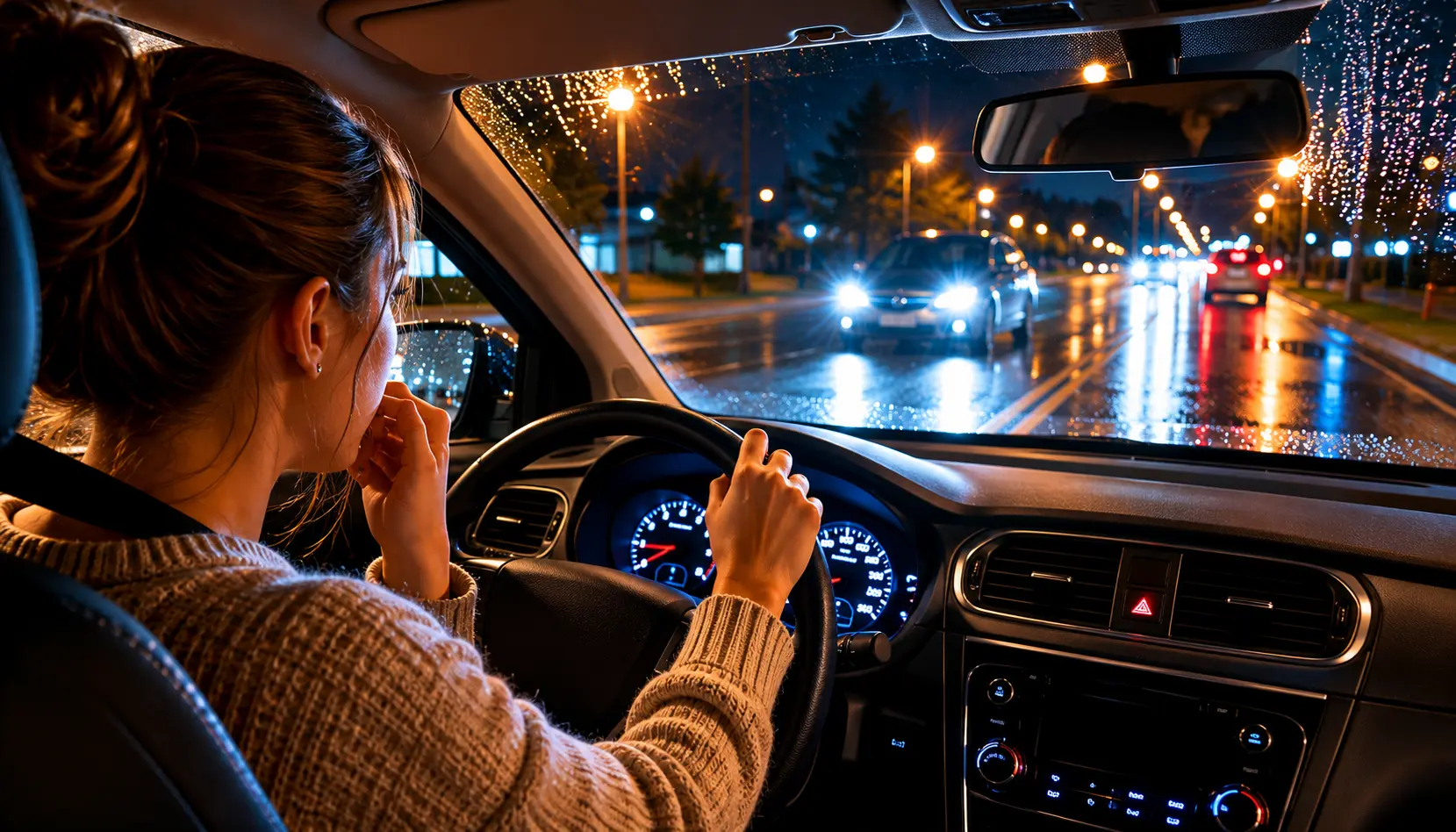
For many new drivers, getting behind the wheel during the day feels manageable. But as soon as the sun goes down, everything changes.
Roads look different. Headlights seem brighter. Distances become harder to judge. Even familiar routes can suddenly feel unfamiliar.
If night driving makes you nervous, you’re not alone. In fact, thousands of drivers discuss this exact issue in online communities every year. The good news is that night driving anxiety is something most people can improve with the right approach and practice.
Why Night Driving Feels More Stressful
Your brain relies heavily on visual information while driving. At night, that information becomes limited.
Street signs are harder to read. Pedestrians can appear suddenly. Headlight glare can make it difficult to focus. Even experienced drivers sometimes feel less comfortable driving after dark.
Researchers have consistently found that fatal crashes occur disproportionately during nighttime hours, partly because reduced light makes hazards harder to detect and react to quickly.
That doesn’t mean night driving is inherently dangerous. It means drivers need to understand the unique challenges that darkness creates.
Did You Know?
Transport Canada reported 1,964 road fatalities in Canada during 2023, the highest number recorded in the last decade. While not all occurred at night, visibility, fatigue, and impaired driving remain significant contributors to serious collisions.

The Most Common Causes of Night Driving Anxiety
1. Headlight Glare
If you’ve ever felt blinded by oncoming headlights, you’re not imagining it.
Transport Canada recently conducted research to better understand how modern vehicle headlights affect drivers because glare has become a growing concern among Canadian road users.
Many anxious drivers describe glare as the biggest reason they dislike driving at night.
Pro Tip
When an oncoming vehicle approaches, avoid looking directly at its headlights. Instead, focus on the right edge line of your lane until the vehicle passes.
This simple technique is recommended by experienced driving instructors and is often overlooked by new drivers.
2. Difficulty Judging Distance
During daylight hours, your brain uses landmarks, shadows, and visual cues to judge speed and distance.
At night, many of those cues disappear.
This can make merging, turning, and parking feel more difficult, especially for newer drivers.
The solution isn’t to avoid driving at night. It’s to gain experience in low-pressure situations where you can build confidence gradually.
3. Fear of Making a Mistake
Many drivers experiencing anxiety aren’t actually afraid of the dark.
They’re afraid of making a mistake.
Questions like:
- What if I miss a turn?
- What if I don’t see someone crossing?
- What if another driver behaves unpredictably?
These thoughts create tension before the drive even begins.
Ironically, the anxiety itself often becomes more distracting than the road conditions.
What Real Drivers Say
One of the most interesting things about night driving anxiety is how common it is.
In Reddit communities such as r/driving and r/drivinganxiety, many drivers describe struggling with glare, reduced visibility, and confidence after dark. A common theme appears again and again:
Start with familiar roads and practice consistently.
Drivers who gradually increased their nighttime driving often reported noticeable improvements in confidence over time.
That’s encouraging because it means confidence is usually learned, not something you’re simply born with.

Practical Ways to Overcome Night Driving Anxiety
Start Small
Don’t begin with a busy highway at 10 PM.
Start with:
- Familiar neighbourhood roads
- Short trips
- Well-lit streets
- Low-traffic routes
Think of it as training rather than testing yourself.
Drive Earlier in the Evening
If full darkness feels intimidating, start during sunset.
This allows your eyes and brain to adapt gradually instead of experiencing an immediate transition from daylight to darkness.
Keep Your Windshield Clean
This sounds simple, but it makes a huge difference.
A dirty windshield can amplify glare from headlights and streetlights, making visibility significantly worse.
Many drivers assume their anxiety is caused by darkness when part of the problem is actually reduced visibility from dirty glass.
Check Your Headlights
Poorly aligned or dim headlights reduce your ability to spot hazards.
Make it a habit to inspect:
- Headlights
- Brake lights
- Turn signals
- Windshield wipers
Good visibility creates confidence.
Take a Defensive Driving Mindset
Night driving isn’t about driving faster.
It’s about giving yourself more time to react.
Increase following distance and scan further ahead than you normally would during the day.
Professional driver education programs often teach these defensive driving habits because they help drivers feel more in control of unexpected situations.
If you’re still building confidence behind the wheel, our Beginner Driver Education programs at Premier Roads can help you develop practical skills for both daytime and nighttime driving.
A Warning About Fatigue
One mistake many drivers make is assuming anxiety and tiredness are the same thing.
They’re not.
However, fatigue can make anxiety much worse.
A recent Canadian survey found that 52% of drivers admitted driving while tired and 24% reported momentarily nodding off while driving during the previous year.
If you’re already nervous about driving at night, being tired can amplify every concern.
If you feel drowsy:
- Pull over safely
- Take a short break
- Stretch your legs
- Drink water
- Delay your trip if necessary
No destination is worth risking your safety.
The Confidence Formula Most Drivers Miss
Many people believe confidence comes before experience.
In reality, it’s usually the other way around.
Confidence comes after experience.
Most drivers who are comfortable at night weren’t naturally fearless when they started. They simply accumulated enough positive experiences that their brain stopped treating night driving as a threat.
The goal isn’t to eliminate nervousness overnight.
The goal is to make each nighttime drive slightly easier than the last one.
Final Thoughts
Night driving anxiety is incredibly common, especially among new drivers.
The good news is that it is usually manageable with practice, preparation, and patience.
Start with short trips. Use familiar routes. Keep your vehicle in good condition. Focus on gradual progress instead of perfection.
Every confident night driver you see on the road today was once a beginner too.
If you’d like professional guidance while building confidence behind the wheel, Premier Roads provides driver education designed to help students become safer, calmer, and more capable drivers in all driving conditions.
Learn more about our driver training programs and start building the confidence that lasts long after you pass your g2 road test.
Comments are closed