


Learning to drive is an exciting milestone, but it comes with a learning curve. Every day, instructors notice recurring mistakes among students, not because they lack talent, but because they often focus on the mechanics of driving rather than thinking like a confident, independent driver.
Understanding these mistakes can save time, reduce stress, and prepare learners for real-world driving situations. Let’s dive into the most common pitfalls and how to overcome them.
1. Neglecting Situational Awareness
One of the biggest mistakes new drivers make is focusing solely on the road ahead, neglecting mirrors, pedestrians, and surrounding traffic. This can lead to missed hazards, last-minute lane changes, or unsafe turns.
Real-life example: A student approaches a junction but is so focused on the stop line that they fail to notice a cyclist on the left, forcing a sudden stop.
Tip: Make a conscious habit of 360-degree observation. Check your mirrors every 5–10 seconds and scan intersections before moving. Awareness equals confidence.
2. Hesitation at Intersections and Roundabouts
Overthinking during turns or merges is a common challenge. Hesitation can confuse other drivers and disrupt traffic flow, but rushing can be dangerous too.
Tip: Practice a decision-making rhythm: observe, decide, execute. Start in quieter areas, then gradually handle busier streets. Roundabouts, in particular, benefit from pre-planning your exit before entering.
3. Inconsistent Speed Control
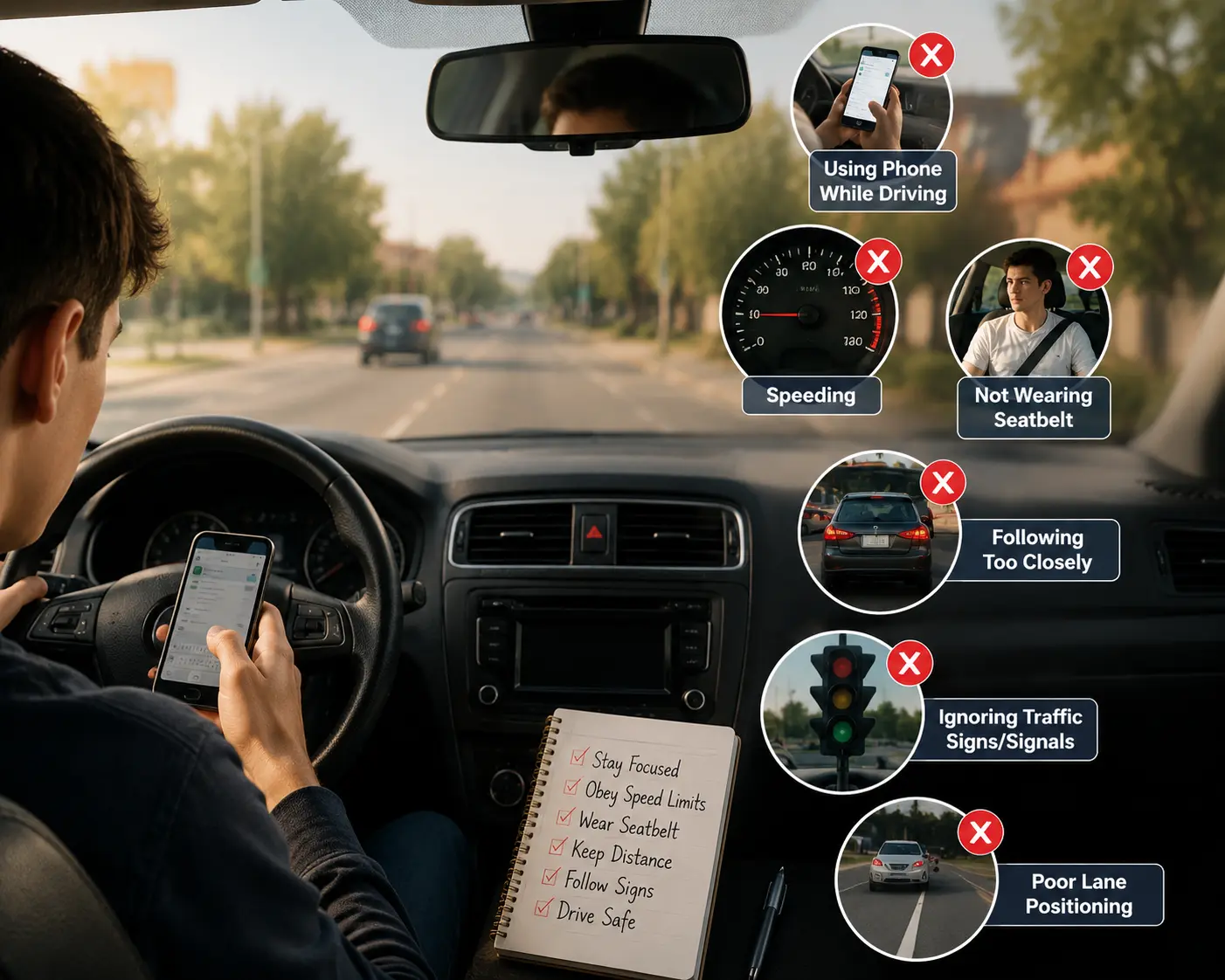
Maintaining appropriate speed is more than obeying limits; it’s about adapting to traffic, weather, and road conditions. Many students drive too slowly under pressure or speed up too much when anxious.
Tip: Learn to match the flow of traffic safely. Practice acceleration and braking to feel the car’s response. Smooth, controlled speed reduces stress and gives you more reaction time.
4. Lane Discipline Challenges
Switching lanes, turning into the correct lane, or staying centered can feel intimidating. Mistakes here are frequent, especially on multi-lane roads or highways.
Real-life scenario: A learner mistakenly stays in the wrong lane before a highway exit, then overcorrects, causing tension or near misses.
Tip: Plan ahead. Know your route and position early. Use lane markings, signs, and early signal indications to reduce last-minute errors.
5. Over-Reliance on the Instructor
While guidance is essential, some learners depend too much on verbal instructions and don’t practice independent decision-making. This slows the transition to solo driving.
Tip: Treat lessons as practice for independence. Ask questions, but gradually make decisions yourself, even small ones like when to merge or change speed. Confidence comes from experience.
6. Nervousness and Overthinking
Anxiety is natural, but overthinking every maneuver can hinder judgment. Some learners tense up at every junction or mirror check, leading to shaky handling or delayed reactions.
Tip: Practice mindful driving. Focus on one task at a time: steering, observing, signaling. Accept mistakes as learning opportunities, not failures.
7. Ignoring Weather and Road Conditions
Students often underestimate how weather or road surfaces affect handling. Wet roads, ice, or construction zones require slower speeds, larger stopping distances, and careful lane positioning.
Tip: Always adjust your driving for real-world conditions. Practicing in varying weather under supervision builds confidence and safety awareness.
8. Poor Parking and Maneuvering Skills
Parking, reversing, and three-point turns are stressful for many learners. Mistakes here are common but critical for urban driving confidence.
Tip: Break complex maneuvers into small, repeatable steps. Use cones, empty lots, or quiet streets for practice before attempting busy areas.
Real-World Support: How Premier Roads Helps Students Learn Smarter

At Premier Roads, instructors see these mistakes every day and guide students through practical, hands-on learning to overcome them. Their approach emphasizes:
- Individual assessment: Understanding each student’s strengths and weak spots
- Gradual exposure: From quiet streets to complex traffic environments
- Practical problem-solving: Teaching how to anticipate hazards and correct mistakes
- Confidence-building: Encouraging independence and reducing reliance on instructors
This combination of professional guidance and structured practice ensures students not only avoid mistakes but also gain the confidence and skills needed for real-world driving.
Final Thoughts
Mistakes are part of learning, but they don’t have to hold you back. By recognizing common pitfalls and practicing intentionally, learners can turn errors into lessons.
Driving is more than technical skill. Confidence grows with preparation, patience, and support from instructors who know how to turn mistakes into stepping stones. With Premier Roads, students get structured learning and practical experience, helping them drive safely, confidently, and independently.
Comments are closed