
Learning to drive a manual transmission is one of those skills that feels intimidating right up until the moment it clicks and then you wonder why you were ever nervous about it. If you’re researching manual driving lessons in Ottawa, chances are the first question on your mind is simple: how many lessons will it actually take?
The honest answer is that it depends on a handful of factors, but most beginners can expect anywhere from 8 to 15 hours of dedicated practice before they feel genuinely confident behind the wheel of a stick shift. In this guide, we’ll break down what shapes that number, what to expect lesson by lesson, and how to get comfortable with a clutch faster whether you’re a total beginner or already hold a licence for an automatic.
Why Learn Manual in the First Place?
- More vehicle options. Some used cars, work vehicles, and performance models are still manual-only.
- Better vehicle control. Manual drivers tend to have a sharper understanding of engine braking, gear selection, and how a vehicle behaves in poor weather than on Ottawa’s icy winter roads.
- Job opportunities. Certain driving jobs, farm equipment, and even some rental cars abroad require manual competency.
- A backup skill. Once you can drive a manual, you can drive almost anything with wheels.
If any of this applies to you, working with a certified instructor through structured in-car driving lessons is the fastest, safest route much faster than trying to learn in a parking lot with a friend.
What Affects How Many Lessons You’ll Need
There’s no single number that applies to everyone. Here’s what actually moves the needle.
1. Prior Driving Experience
If you already hold a G2 or G licence and drive automatic confidently, your lessons will focus almost entirely on clutch control, gear timing, and hill starts, not on basic road rules or hazard awareness you’ve already mastered. These learners often need as few as 4 to 6 lessons.
Complete beginners people who have never driven any vehicle need more time overall, because they’re learning two things simultaneously: how to drive, and how to operate a clutch. This group typically needs 10 to 15 lessons, which is why many students start with our 10-Hour Comprehensive Package or the 5-Hour Foundation Package as a starting point before adding manual-specific practice.
2. Comfort with Coordination-Based Tasks
Manual driving is essentially a coordination skill like learning to ride a bike or play an instrument. Some people pick up the left-foot/right-hand timing of clutch and gear shifting within a lesson or two. Others need more repetition before it becomes automatic (pun intended). Neither is “better” ; it simply reflects how your brain and body learn new motor patterns.
3. Frequency of Practice
Spacing matters. Students who take one lesson every few weeks tend to relearn the basics each time, effectively resetting progress. Students who book two to three lessons per week build muscle memory faster and typically finish in fewer total hours. If your goal is to minimize lesson count, consistency beats intensity.
4. The Vehicle and Terrain
Some cars have a more forgiving clutch bite point than others, and Ottawa’s mix of flat suburban streets, hills near the Rideau Canal, and busy downtown intersections all present different challenges. A good instructor will start you in low-traffic areas and build up to more demanding conditions like a hill starts on a slope or merging onto the Queensway only once the fundamentals are solid.
5. Test Goals
If your only goal is to pass your G2 or G road test, your lesson plan will differ from someone who wants full mastery of manual driving in all conditions (highway, winter, parallel parking on a hill, etc.). Be clear with your instructor about your goal so your lessons are tailored accordingly this is one of the biggest time-savers.
A Realistic Lesson-by-Lesson Breakdown
While every student is different, here’s a general roadmap our instructors use with beginner driving lessons in Ottawa for manual transmission:
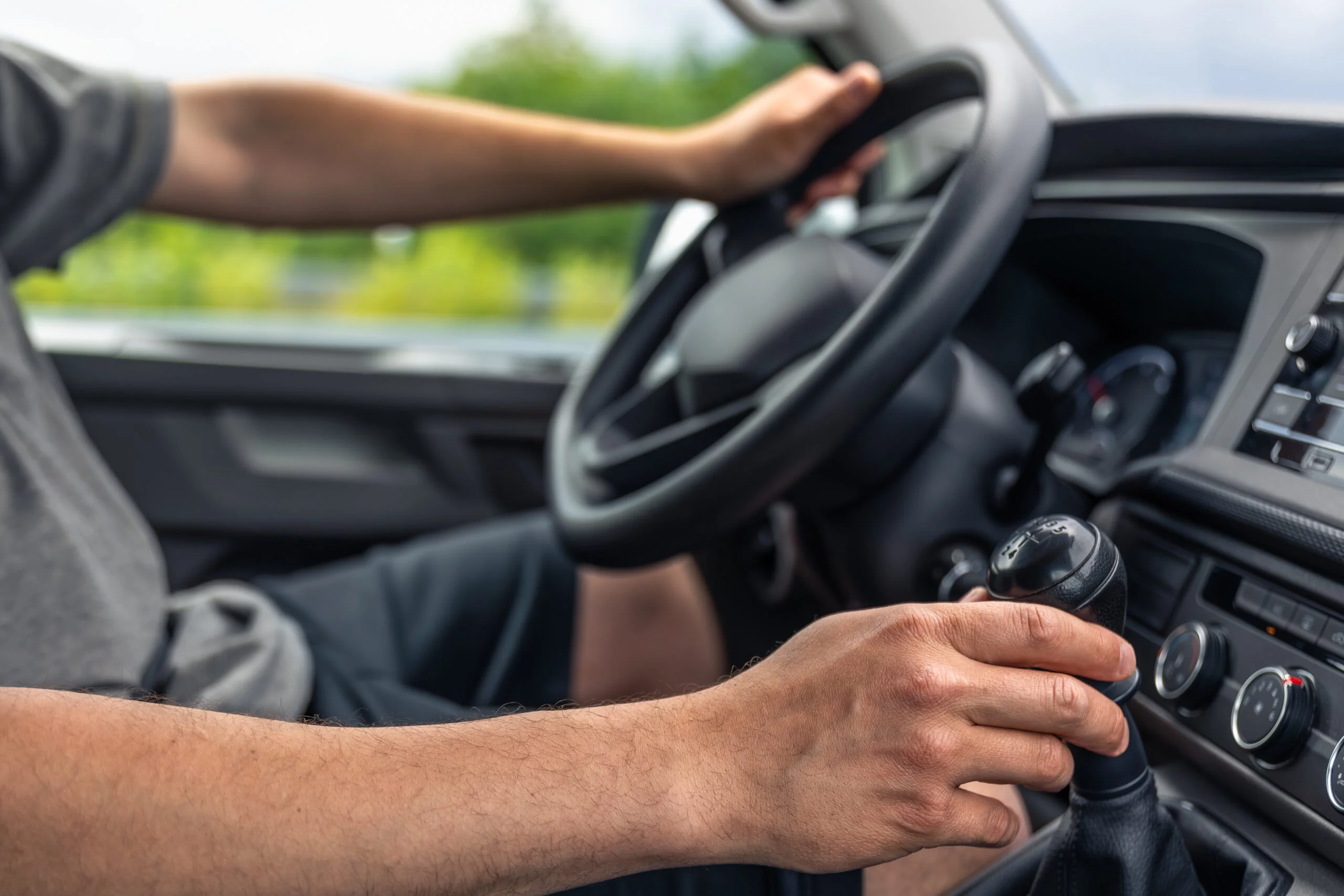
Lessons 1–2: Fundamentals Getting familiar with the clutch, gear stick, and pedal coordination in a quiet, low-traffic environment. Expecting stalling it’s completely normal and part of the process.
Lessons 3–5: Smooth Starts and Stops Practicing clutch control for smooth starts, stopping without stalling, and basic gear changes (1st to 2nd to 3rd) at low speeds.
Lessons 6–8: Hill Starts and Traffic Introducing hill starts (a common source of anxiety for new manual drivers), stop-and-go traffic, and four-way stops.
Lessons 9–11: Higher Speeds and Complex Roads Merging, higher gears (4th and 5th), and navigating busier Ottawa roads with more variables to manage.
Lessons 12–15: Road Test Readiness Fine-tuning parking, reverse manoeuvres, and full-route practice that mirrors your actual G2 or G road test conditions.
If you’re aiming for your road test soon, pairing your manual lessons with our G2 Test Car Rental or Full G Test Car Rental ensures you’re practicing in a vehicle you’re already comfortable driving on test day.
Signs You’re Ready to Reduce Lesson Frequency
You don’t need a fixed number of lessons — you need clear signs of readiness. You’re likely close to finishing when you can:
- Start from a stop without stalling, consistently, on flat ground and hills
- Shift gears without looking down at the gear stick
- Maintain steady speed in traffic without jerky acceleration
- Downshift smoothly when slowing down or approaching a stop
- Handle a four-way stop or intersection without hesitation
If you’re still stalling frequently in low-pressure situations, that’s a sign to book a few more sessions rather than pushing toward your road test prematurely.
Common Mistakes That Add Extra Lessons
A few habits tend to stretch out the learning curve unnecessarily:
- Riding the clutch resting your foot on the pedal while driving, which wears the clutch and creates bad habits.
- Looking down at the gear stick instead of keeping eyes on the road.
- Rushing hill starts before clutch control is solid on flat ground.
- Inconsistent practice, which causes skills to fade between lessons.
- Skipping structured feedback learning with a friend or family member instead of a certified instructor often means picking up mistakes that go uncorrected.
Working with a professional from a driving school in Ottawa helps you avoid these pitfalls from day one, which can meaningfully cut down your total lesson count.
Manual vs. Automatic: Does It Affect Your Road Test?
In Ontario, the Ministry of Transportation doesn’t require you to test in a manual vehicle — you can complete your G2 and G road tests in either transmission type. However, if you pass your test in an automatic, your licence will typically carry a condition restricting you to automatic vehicles only, unless your province’s rules specify otherwise. If driving manual matters to you long-term, it’s worth confirming current licensing conditions and, if needed, completing your road test in a manual vehicle or getting additional manual-specific certification later.
This is a good conversation to have with your instructor early, since it can shape how your lesson plan is structured from day one.
How Premier Roads Structures Manual Lessons
At Premier Roads, our certified instructors tailor every plan around your starting point, comfort level, and goals whether that’s your first time behind a wheel or brushing up before a road test. Our in-car driving lessons are built around real Ottawa roads and conditions, so you’re not just learning to drive you’re learning to drive here, in the traffic patterns, weather, and intersections you’ll actually encounter.
Packages like our 5-Hour Foundation Package and 10-Hour Comprehensive Package give beginners a strong base, while additional hours can be added flexibly as you build confidence with the clutch and gear changes. Every lesson includes pickup and drop-off across our Ottawa service area, so getting to your lessons is one less thing to worry about.
Final Thoughts
There’s no universal number of driving lessons in Ottawa that guarantees manual mastery it depends on your experience, consistency, and comfort with coordination-based skills. That said, most beginners land somewhere between 8 and 15 hours of quality, structured instruction, while those upgrading from automatic often need far less.
The single biggest factor in reducing your total lesson count isn’t talent — it’s consistency and quality instruction. Regular practice with a certified instructor who corrects small mistakes early will always get you road-ready faster than sporadic practice on your own.
Ready to start? Book your manual driving lessons with Premier Roads today and get matched with an instructor who will build a plan around your goals, your schedule, and your comfort level behind the wheel.
Comments are closed